
How to Remove Stubborn Pool Tile Stains Without Damaging Your Surface
December 8, 2025
Pool tile cleaning is the process of removing calcium buildup, stains, and scale from the waterline without harming the tile surface. Pool tile restoration goes a step further, addressing discoloration, etching, and structural wear to bring tiles back to optimal condition.
Maintaining clean, buildup-free tiles is an essential part of long-term pool maintenance
, especially in Arizona’s hard-water environment. Homeowners in the Vistancia area often notice white, crusty deposits forming along the waterline as temperatures rise. While common, removing them improperly can lead to cracked tiles, scratched surfaces, or grout damage. Below, we break down the safest and most effective ways to eliminate stubborn stains while keeping your tile surface protected.
What Causes Stubborn Pool Tile Stains in the First Place?
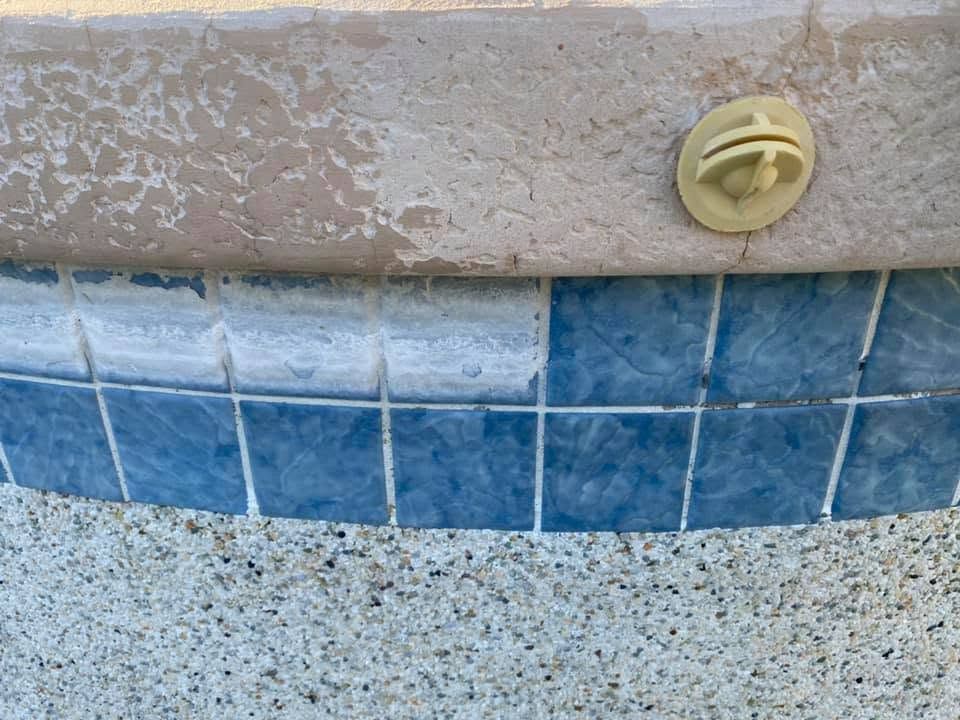
Most pool tile stains are caused by mineral deposits, primarily calcium carbonate and calcium silicate. These minerals naturally accumulate when hard water evaporates and leaves deposits behind. Over time, they solidify into thick layers that cannot be wiped away with basic cleaning tools.
Other common sources include:
- Body oils and sunscreen
- Algae growth and organic debris
- Chemical imbalance, especially high pH levels
- Saltwater system residue
Once buildup becomes hardened, removing it safely requires the right tools, techniques, and understanding of your pool’s material. Incorrect handling can create irreversible surface damage.
Is It Safe to Remove Stains Yourself?
It depends on the severity and type of buildup. Light calcium deposits can sometimes be managed with gentle scrubbing and balanced water chemistry. However, thick, chalky calcium layers or hard, glass-like silicate deposits typically require professional equipment.
Common DIY risks include:
- Scratching tiles with abrasive tools
- Breaking tiles by using sharp objects
- Damaging grout lines
- Etching delicate stone or glass tiles
- Worsening the stain by using the wrong chemical
Because pool tile varies in hardness and porosity, what works for ceramic tiles may harm natural stone or porcelain. For most stubborn deposits, professional pool tile cleaning
is the safest option.
To understand how experts handle the process, homeowners can explore services like pool tile restoration
offered within Vistancia Premier Pool Tile Cleaning
’s service solutions..
What Cleaning Methods Are Effective Without Causing Damage?
Only a few methods reliably remove heavy deposits without compromising the tile surface. The most commonly recommended approach is media blasting
, specifically glass bead or mineral blasting.
1. Glass Bead Blasting
This method uses fine, round beads to gently strip calcium without scratching the tile. It is ideal for ceramic, porcelain, and most glass tiles.
2. Salt or Mineral Blasting
For more delicate surfaces, softer blasting media such as magnesium sulfate helps remove buildup while preserving finish quality.
3. Controlled Pressure Washing
This is used sparingly and only at low pressure. High pressure can cause cracks or detach tiles entirely.
4. Professional-Grade Scale Removal Solutions
These are carefully selected to break down calcium without damaging grout or discoloring tile.
Each method requires controlled application, which is why trained technicians assess tile type, hardness, and stain severity before choosing a removal process.
For homeowners seeking consistent upkeep, Vistancia Premier’s pool maintenance
services support long-term prevention and tile longevity.
How Can You Prevent Stains From Returning?
Preventive care is just as important as stain removal. Even after tiles are restored, mineral deposits return quickly without proper maintenance. The following steps reduce buildup and extend the time between cleanings:
Keep Water Chemistry Balanced
Regular testing helps maintain the right pH, alkalinity, and calcium hardness levels. Proper balance reduces mineral precipitation.
Brush the Waterline Weekly
Light brushing interrupts early buildup before it hardens.
Use a Pool Cover When Not in Use
Covers limit evaporation, which slows calcium deposits caused by Arizona’s dry climate.
Schedule Routine Professional Maintenance
Consistent monitoring prevents stains from developing and identifies early signs of scaling or grout wear.
By combining good water chemistry, light care, and periodic professional servicing, homeowners can maintain clean, resilient pool tiles year-round.
When Should You Consider Pool Tile Restoration Instead of Cleaning?
Restoration becomes necessary when stain removal alone cannot achieve the desired result. Consider a restoration service when you notice:
- Deep discoloration that brushing cannot fix
- Chips, cracks, or worn grout
- Etched surfaces caused by harsh chemicals or abrasive tools
- Uneven tile surfaces
- Aged tiles that no longer match the aesthetic of the pool
Restoration often involves surface refinement, tile replacement, grout repair, and finishing touches that bring the waterline back to a clean, cohesive appearance.
How Can Homeowners Keep Their Pool Tiles Looking New?
After a thorough pool tile cleaning,
maintaining the refreshed look requires steady care. Homeowners can maximize results by:
- Scheduling seasonal cleanings
- Monitoring calcium levels
- Reducing evaporation through shading or covers
- Using preventive sealants when appropriate
With consistent maintenance and timely cleaning, pool tiles stay bright, smooth, and free from mineral buildup.
Get Expert Pool Tile Cleaning and Restoration Services
If you’re dealing with stubborn waterline stains, thick calcium deposits, or tiles that have lost their original shine, Vistancia Premier Pool Tile Cleaning
offers professional solutions designed to safely clean, restore, and maintain your pool surfaces. For more information on pool tile cleaning, pool tile restoration, or ongoing pool maintenance, contact us
today to schedule professional service and protect the long-term quality of your pool.
The post How to Remove Stubborn Pool Tile Stains Without Damaging Your Surface
appeared first on Vistancia Premier Pool Tile Cleaning.
October 14, 2026
Learn about the white crust on pool tiles, its causes, & effective cleaning methods. Contact us for expert service in San Tan Valley!
August 4, 2026
Are you looking to work with one of the top pool tile cleaning companies? Keep reading to discover the benefits of hiring a reliable pool tile cleaning.

June 8, 2026
Are you overlooking how regular pool cleaning protects water quality? Consistent pool cleaning keeps water clear, balanced, safe, and inviting year-round.